An Evening with Tarrus Riley: Ubuntu, Humility, and the Energy That Moves You
- Mellany Paynter
- Feb 19
- 6 min read

Updated: 22 hours ago
A personal reflection on an intimate conversation
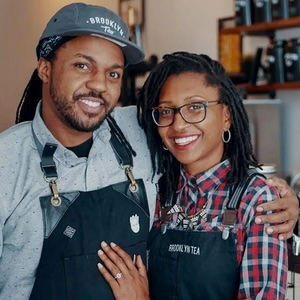
There's something about Brooklyn on a winter evening that feels like it was designed for moments like this. The air is cold but the anticipation you carry makes you warm on the inside. And on February 17, tucked inside Coffee Uplifts People, a space that smells like fresh roast and community, Jamaican-American reggae singer Tarrus Riley sat down for a conversation that felt less like an interview and more like passing the aux to an old friend.
Hosted by Ronnie Tomlinson of Destine Media as part of the Pass The Aux Living Room Experience series, the evening was moderated by Chris Williams (WhereItzAt), whose thoughtful questions made space for Tarrus to be more than the voice behind the hits. He became the storyteller, the philosopher, the humble craftsman who still overthinks his lyrics and tests them on his circle before releasing them to the world.
I didn't know what to expect walking in. I knew the music. Who doesn't know "She's Royal"?, but I didn't know the man. By the time the night was over, I felt like I'd been given something rare: a window into the mind of an artist who understands that music is not just sound. It's energy. It's motion. It's meaning.
"I Am Because We Are"
Early in the conversation, Tarrus spoke about Ubuntu, the African philosophy that translates to "I am because we are." It's a belief system rooted in interconnectedness, in the understanding that our humanity is bound up in each other's. No one exists in isolation. We are shaped by community, by relationships, by the collective.
For Tarrus, this isn't just philosophy. It's how he lives and creates. He gathers inspiration from conversations, from passing the aux, from the moments when someone shares a song that moves them and he asks why. Music, for him, is a communal act, something made in connection, tested in community, and ultimately given back to the people.
That humility was present throughout the evening. Despite being larger than life on stage, Tarrus Riley in conversation is funny, likable, and deeply grounded. He laughed easily. He listened carefully. He never postured. There was no performance, no ego inflating the room. Just a man talking about the thing he loves most: the craft of making music that means something.
He mentioned a lyric from his album Challenges: "The man who thinks he's larger than life / He doesn't even knows how he came in existence..." (Larger Than Life) and then stopped himself, letting the implication hang in the air. The line is a warning, a reminder that no matter how celebrated you become, humility keeps you human. Ubuntu keeps you connected.
"She's Royal" Is Still a Meditation
When Chris Williams asked about "She's Royal," the iconic 2006 song that became a cultural anthem for Black love, Tarrus described it as "a meditation, a cultural love song." Orignally titled "She's Got It", it wasn't written to chase a trend or capitalize on a moment. It was written from a set of values, respect, reverence, partnership, that he believed in then and believes in now.
That's why it still feels relevant 20 years later. The song doesn't age because the values it represents don't age. Honoring your partner, recognizing the royalty in Black women, building relationships rooted in mutual respect, these things are timeless. "She's Royal" is not a product of 2006. It's a product of a worldview that extends far beyond any single era.
Hearing him talk about it that way made me realize something: the songs that last are the ones that come from conviction, not convenience.
Parables and Hungry Days
Tarrus also spoke about "Parables," a song that represented "hungry days" and the times when things were tight, when the struggle was real, when survival wasn't guaranteed. The song talks about serious things, using allegory and metaphor to make sense of hardship without drowning in it.
He referenced Ethiopian history, the crowning of the King and Queen in 1930, the sunburned face that comes from being outside in the heat of struggle and survival. These aren't just lyrics to him. They're lived truths, cultural memory, and spiritual grounding all wrapped into one.
That's the thing about Tarrus Riley's music. It doesn't stay on the surface. It digs. It asks questions. It carries weight.
The Hidden Gem: "Pick Up the Pieces"
When asked which of his songs felt like a hidden gem, Tarrus didn't hesitate: "Pick Up the Pieces" from 2006.
I made a note to revisit it after the event. And when I did, I understood why he chose it. The song is tender, introspective, and vulnerable in a way that doesn't always get celebrated in reggae spaces. It's about rebuilding, about facing your own brokenness and doing the work to heal. It's not anthemic. It's personal. And maybe that's why it doesn't get the same shine as "She's Royal" or "Good Girl Gone Bad." But for Tarrus, it's the kind of song that represents the truest part of his artistry: music that reflects real emotion, not just commercial appeal.
Music Is the Moment
One of the most striking things Tarrus said all night was this: "Music means the most to me in a moment. No special song."
It was a profound reframing of how we often think about artists and their work. We want them to have a favorite. We want them to crown one song above the rest. But for Tarrus, the song that matters most is the one he needs in that particular moment, the one that matches his emotional state, the one that moves him when he needs to be moved.
And that's how he creates too. Every song starts with emotion. "Energy that moves you," he said. Not a beat. Not a hook. Not a concept. Energy. Feeling. The thing that makes you want to say something, to sing something, to release something into the world.
The true part of his music, he explained, is the passion behind it, the belief in what he's saying. He really means every word in every song. That kind of sincerity is rare in any industry, but especially in music, where artists are often coached, curated, and molded by outside voices.
But Tarrus tests his music. He overthinks it. He gathers feedback from people he trusts. He corrects as he goes. He doesn't release something until it feels true.
The Playlist of His Soul
Toward the end of the evening, Chris Williams asked Tarrus about some of his favorite songs—the ones that shaped him, moved him, stayed with him.
His list was revealing:
Sizzla – "Guide Over Me"
Chris Brown – "Just Let Me Ride" (I smiled at this one. It's proof that musical taste doesn't live in boxes)
Luther Vandross – "Love Has Truly Been Good to Me"
Buju Banton – "I Wanna Be Loved"
Bob Andy – "My Time" (he referenced the lyric: "Nothing to be, man, cause I was born again…")
Each song is about something essential: guidance, freedom, gratitude, love, and rebirth. Listening to him rattle off those titles felt like getting a map to his inner world.
Pass The Aux
The beauty of the Pass The Aux Living Room Experience is right there in the name. It's about the intimacy of sharing music, of handing someone control of the sound and trusting them to take you somewhere meaningful. That's what the evening felt like, an invitation into Tarrus Riley's creative mind, his values, his inspirations, and his process.
Ronnie Tomlinson and Destine Media created something special with this series. It's not a concert. It's not a press junket. It's a conversation that honors the artist as a full human being, not just a hit-maker. And in a world that constantly demands more, louder, faster, bigger, this kind of space feels revolutionary.
What I Took With Me
As I walked out of Coffee Uplifts People that night, the streets still humming with Brooklyn energy, I thought about Ubuntu - I am because we are.
Tarrus Riley's music has always carried that truth, even when I didn't have the language for it. His songs remind us that we're connected - to our ancestors, to our culture, to each other. They remind us that love is revolutionary. That humility is strength. That the energy that moves you is worth following, even when it leads you into vulnerable, uncertain, or difficult places.
I left grateful. Grateful for the music. Grateful for the conversation. Grateful that artists like Tarrus Riley still believe that music should mean something, and are willing to do the work to make sure it does.
This evening with Tarrus Riley wasn't just a night out. It was a reminder of why music matters. And why we keep passing the aux. It's also a reminder that Caribbean excellence isn't always loud or flashy, sometimes it's quiet, thoughtful, and deeply rooted. It shows up in the humility of a reggae legend sitting in a Brooklyn coffee shop, sharing his process with a room full of strangers who left feeling like family. That, too, is excellence. The kind that builds community, honors tradition, and moves with intention. The kind that reminds us we are because we are.
Pass The Aux Living Room Experience is a series hosted by Ronnie Tomlinson of Destine Media, creating intimate spaces for artists and audiences to connect beyond the stage.
This Is Caribbean Excellence celebrates Caribbean achievement, culture, and representation across the globe. Follow us for more stories of Caribbean excellence in sports, food, art, fashion, and beyond.


Comments